
Feature
The Air Force Sent Him to Medical School. Pathology Is Where He Landed
Vincent Lattanze entered Einstein on an Air Force scholarship with no interest in pathology. He leaves as a CAP Distinguished Medical Student Award winner, a first-author researcher, and a pathology resident-to-be at Brooke Army Medical Center, in San Ant
April 16, 2026
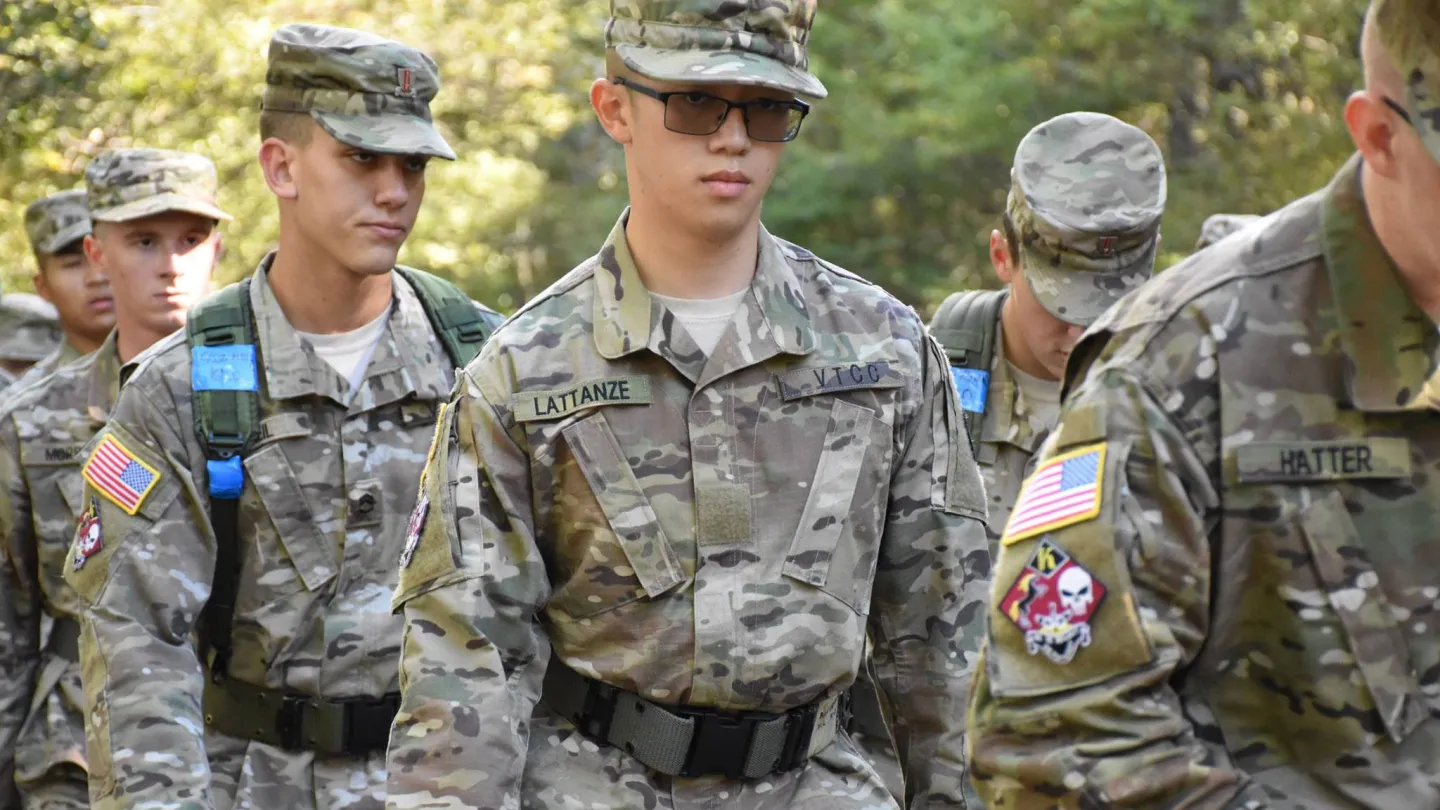
Vincent Lattanze during his first year of ROTC at Virginia Tech in 2018, on a 13-mile march in the Appalachian Mountains of southwestern Virginia.
When fourth-year Einstein medical student Vincent Lattanze, a Second Lieutenant in the U.S. Air Force, was notified that he had received the Distinguished Medical Student Award from the College of American Pathologists (CAP), he was stunned to learn he had won.
"The fact that the pathologists at Montefiore, who are so accomplished, thought I was worthy of being nominated means more to me than winning the award itself," said Lattanze. "If I can make one correct diagnosis that inspires a patient to get the proper treatment plan, these four years of medical school and four years of residency are worth it.”
Pathology was not on his radar when he arrived at Einstein in 2022 on a Health Professions Scholarship Program (HPSP) award, one of the Air Force's most competitive merit-based scholarships. He was thinking about anesthesiology. It was during a clinical rotation that he realized the high-stakes immediacy of the operating room was not where he thrived.
Lattanze prefers to sit with a problem until he understands it, weighs the possibilities, and reaches a judgment. "Pathology is not detail for detail's sake," he said. "It really rewards and requires deep thinking."
In December, when military residency matches are announced, Lattanze matched into pathology at San Antonio Uniformed Services Health Education Consortium (SAUSHEC), where his primary training site will be Brooke Army Medical Center. By the time Lattanze traveled to San Antonio for a mandatory away rotation, he was committed to the field and opted to do the surgical pathology rotation upon his return to Montefiore.
His passion for the field did not go unnoticed by Roger Fecher, MD, PhD, director of neuropathology at Montefiore Einstein, who oversaw Lattanze as he moved through anatomic and clinical pathology subspecialties, including genitourinary pathology, gynecologic pathology, frozen sections, hematopathology, chemistry, and neuropathology brain-cutting sessions. At the end of the rotation, he was so impressed that he nominated Lattanze for the CAP award.
"Despite having already matched in pathology residency, he was very enthusiastic about all the rotations; he stayed late, was great to work with, and demonstrated a keen eye for someone early in their career," said Dr. Fecher, who serves as associate director of the pathology residency training program. "All of this without any real need to impress anyone, which I found impressive."
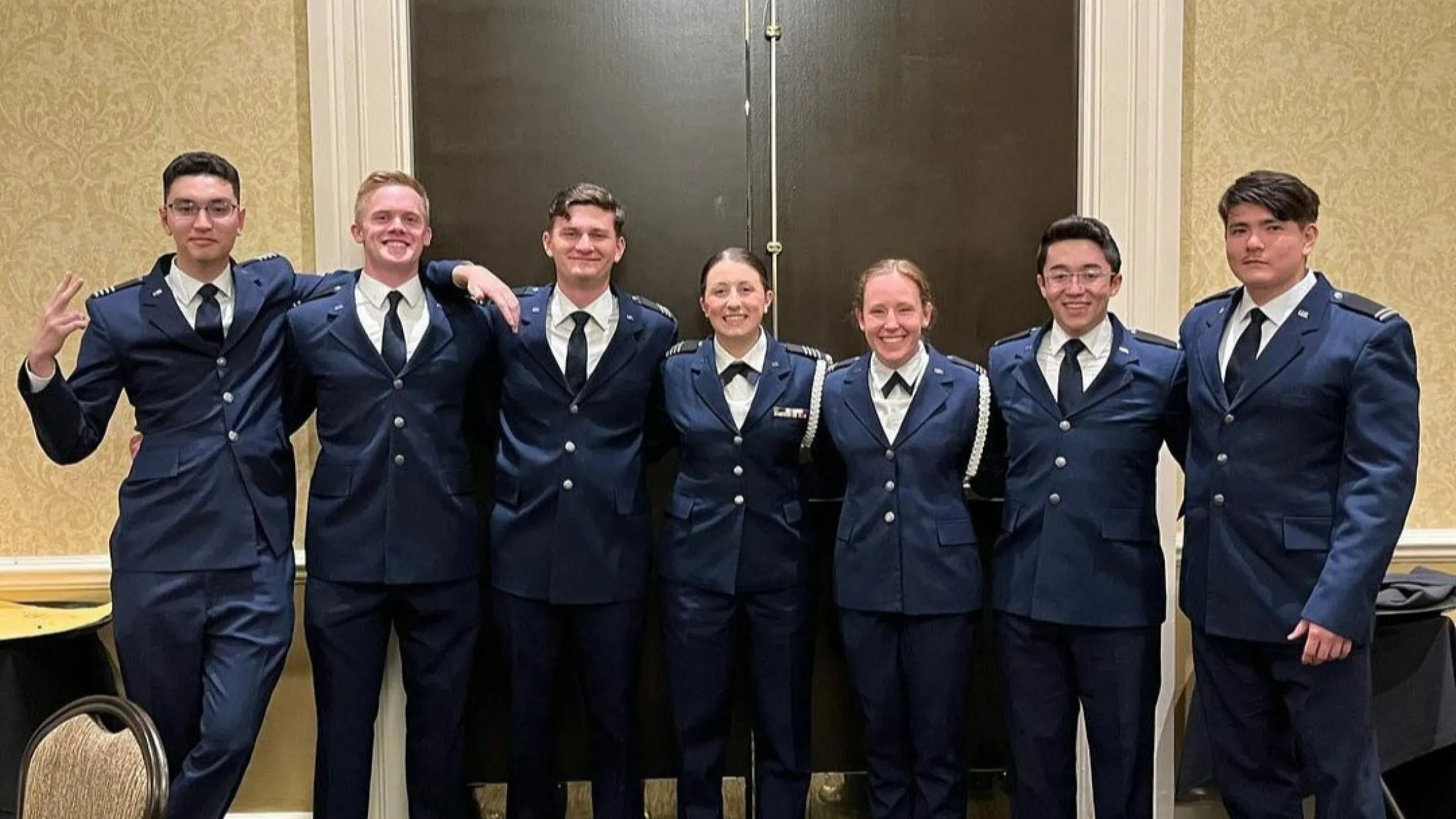
Vincent Lattanze, second from right, with fellow Air Force ROTC cadets at his detachment’s military ball at the University of Virginia in 2022.
A Framework Before the Vocabulary
Lattanze grew up in Virginia. With his father having previously served in the Air Force, military service was already part of his family background. He arrived at the University of Virginia on an Air Force ROTC scholarship, scored in the 99th percentile on the Air Force Officer Qualifying Test, and spent two years working as a Certified Nursing Assistant at UVA Health System, rotating through surgical, rehabilitation, and assisted living units.
His ROTC assignment designated him as an air battle manager. The role centered on coordinating and directing air operations. He realized he was less drawn to working in an aviation environment and decided instead to pursue medical school. In exchange for the ROTC and HPSP scholarships, he owes eight years of active-duty service after residency. He does not frame that obligation as a burden. It shaped, he says, how he works.
"Things like discipline and integrity have served me very well in medical school," he explained. "Everyone in the military has a sense of duty, and I'm happy to embody those values."
How Pathology Found Him
In his third year at Einstein, Lattanze entered a lottery for a two-week clinical elective and drew pathology. The rotation, supervised by Bryan Harmon, MD, a surgical pathologist formerly at Montefiore, was a broad overview rather than a deep dive. He saw how surgical pathologists work with surgeons, oncologists, and other providers to guide patient treatment decisions. It was enough to put pathology on his radar.
That two-week elective became a long-term commitment during a dedicated month-long cytopathology rotation under Agnes Colanta, MD, an attending cytopathologist at Montefiore. Working closely with faculty and trainees, Lattanze spent the month learning cytomorphology and performing fine-needle aspiration biopsies.
"I saw how central the pathologist's work is in terms of making the right diagnosis," he said. "From the very first day, I was struck by the warmth of pathologists and the collegial culture," he added.
Dr. Colanta recalls how Lattanze's end-of-rotation presentation on NUT carcinoma, a rare, aggressive cancer caused by a change in the NUTM1 gene, drew praise from colleagues. "One faculty member commented that the quality of his presentation was senior resident-level," she said. "It was a real pleasure working with Vincent because he's genuinely interested in pathology and cytology, which made teaching enjoyable."
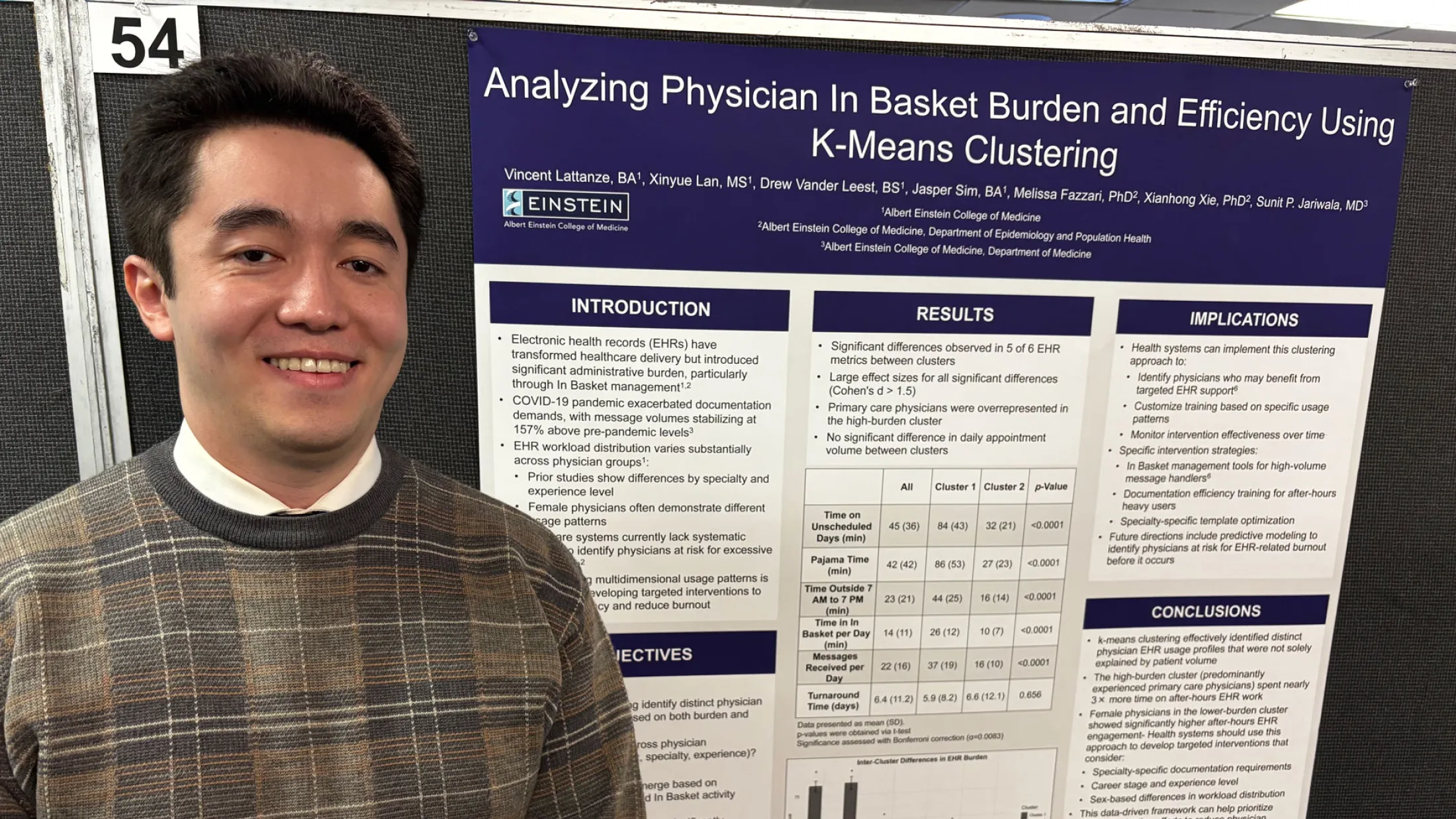
Vincent Lattanze presenting his research at Einstein’s IMPact Day in 2025.
Machine Learning in the Clinic
When Lattanze decided to apply machine learning to a clinical informatics problem, he did not know how. He taught himself k-means clustering in R. Working with his research advisor, Sunit Jariwala, MD, an attending allergist and professor of medicine who leads Einstein's Biodesign Innovation program, he applied k-means clustering, an unsupervised machine learning method, to identify subgroups of physicians at high risk for electronic health record burden and messaging inefficiency. He directed a small student research team and served as first author on the resulting publication in Applied Clinical Informatics in March 2025.
"This project is extremely important to our health system and the clinical informatics literature," said Dr. Jariwala, a co-author on the paper. "The findings describe which clinicians might benefit the most from technology-based approaches to reduce documentation burden."
Lattanze presented the work at Einstein's IMPact Day in 2025 and co-developed a seminar on AI in academic medicine for preclinical students.
His interest in the field is practical. "I'm interested in AI's ability to present new perspectives on data and to streamline the daily life of a physician," he said, "so we can spend more time on what actually matters."
What Comes Next
As a military pathologist, Lattanze will practice the full scope of pathology, both anatomic and clinical, handling everything from biopsy specimens to lab operations to autopsies. Long term, he leans toward anatomic pathology, drawn by its visual and interpretive demands. After completing his eight years of active-duty service, he plans to pursue a fellowship and transition to civilian practice.
The military also opens appealing possibilities. Pathologists have been stationed at bases across the U.S. and in the UK, Japan, Korea, and Germany. Compared with colleagues in specialties such as emergency medicine or surgery, military pathologists face fewer deployment-related demands, since much of their work depends on laboratory infrastructure and is generally less acute and time-sensitive. The role offers a broad and varied caseload and a geographic range few pathologists have at the start of a career.
Throughout medical school, Lattanze volunteered at the Einstein Community Health Outreach (ECHO) Free Clinic, New York City's oldest student-run free clinic, where he worked with uninsured patients across the Bronx. He speaks conversational Mandarin, and describes the diversity of patients, languages, and backgrounds he encountered at Einstein and Montefiore as one of the more valuable parts of his training.
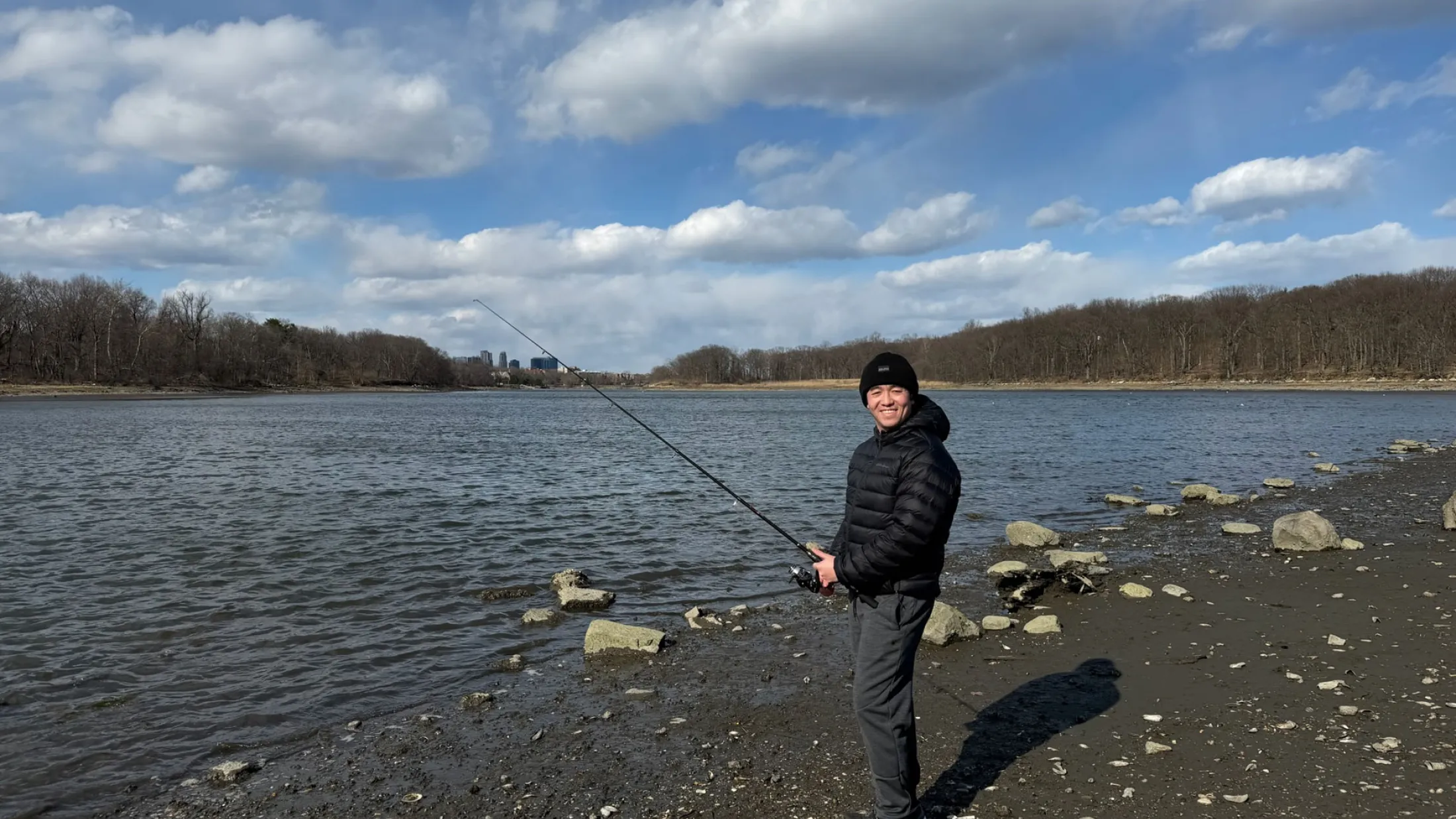
Vincent Lattanze fishing for perch and pickerel at Pelham Bay Park in December 2025.
No Problem to Solve
Since arriving in New York, Lattanze has taken up fishing, driving to lakes in New Jersey and fishing off piers in Great Neck, Long Island. He plays bass guitar and hikes when he can. None of it requires him to solve a problem. That is the point.
"With music, there is no problem to solve," he said. "It's just getting in the groove and focusing on the mind-muscle connection between your brain and your fingers. It helps me tune out and focus on the sound and what my body is feeling."
Fishing works the same way. He is not there to catch the fish. "Being able to sit out there with your thoughts and watch the water ripple is something I really value," Lattanze said. He moves to San Antonio in June.
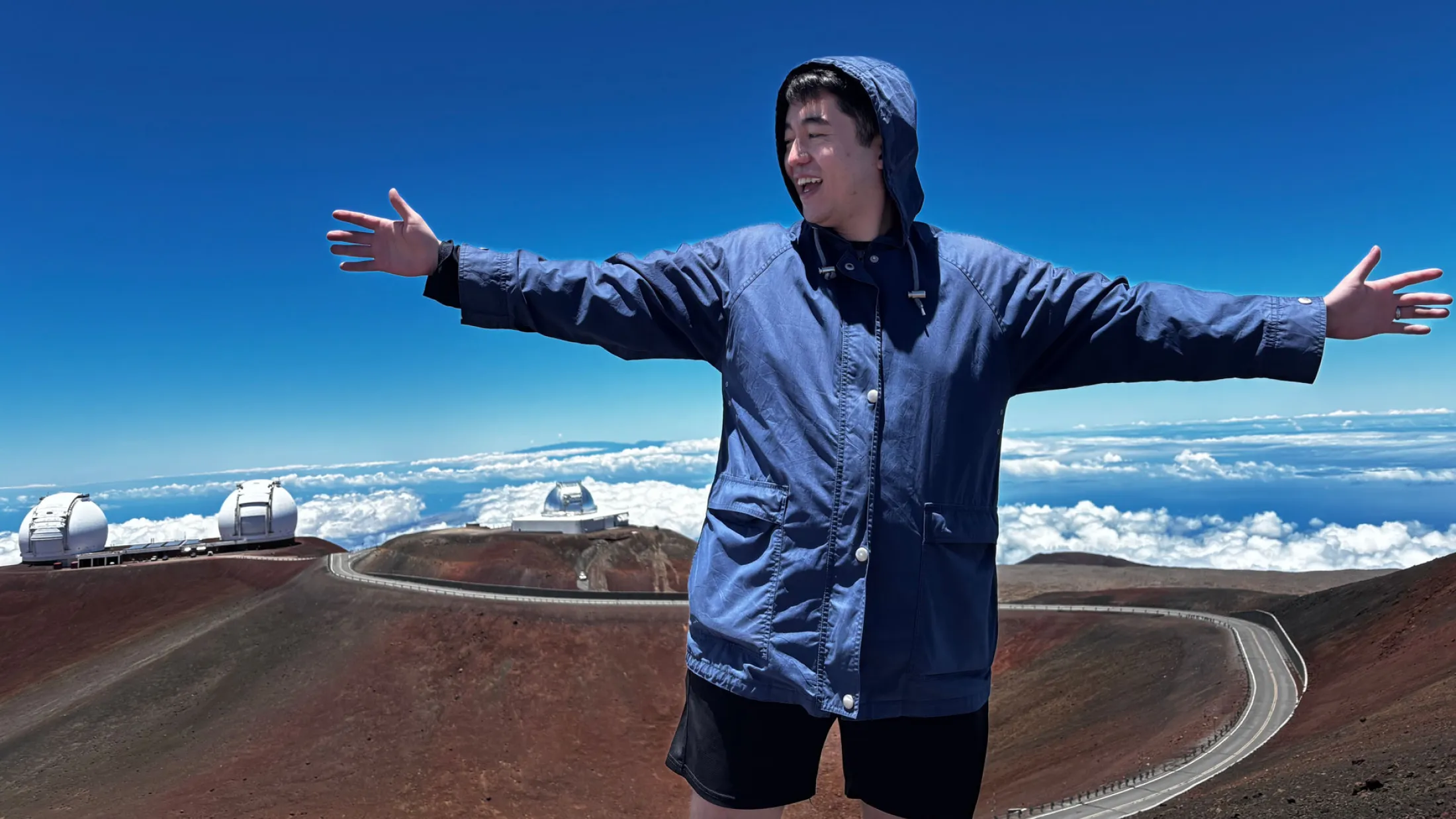
Lattanze hiked to the summit of Mauna Kea in Hawai’i in August 2025