
Video could not be played
Feature
Dr. Divij Verma Joins Pathology as Principal Investigator
December 29, 2025
Video could not be played
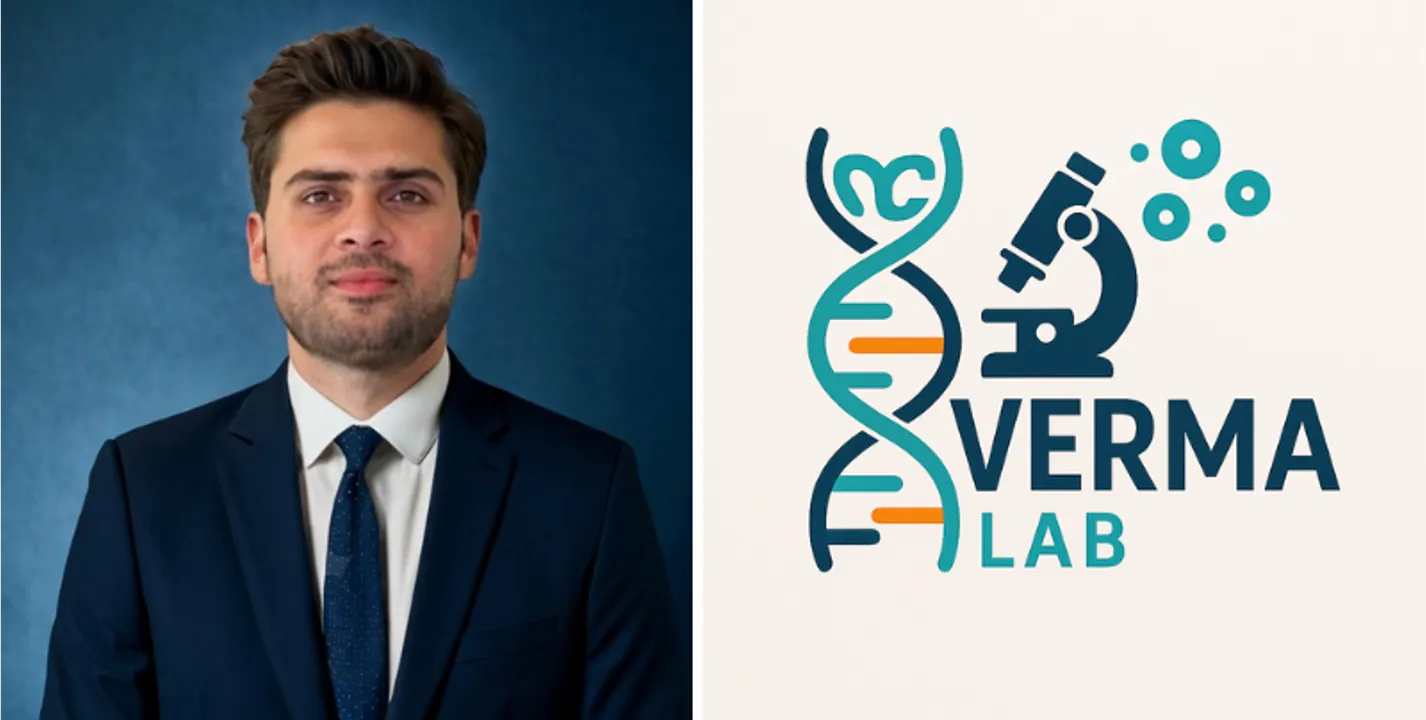
The Montefiore Einstein pathology department is pleased to welcome Divij Verma, PhD, a cancer biologist with expertise in the cancer microenvironment, hematopoietic stem cells, hematologic malignancies, and prostate cancer, as an assistant professor of pathology and principal investigator. The new Verma Lab studies how environmental pollution and chronic inflammation damage stem cells and drive cancer development.
Dr. Verma trained at Einstein beginning in 2019 as a postdoctoral fellow under the mentorship of the late Paul S. Frenette, MD, PhD, and Amit Verma, MD. In 2024, he received the Paul S. Frenette Scholar Award from the Ruth L. and David S. Gottesman Institute for Stem Cell Research and Regenerative Medicine.
“Starting my own lab has been a long-standing dream and I am incredibly excited to begin this next chapter,” said Dr. Verma, who holds a joint appointment as assistant professor of oncology. “Our work focuses on translating basic discoveries into strategies to prevent or intercept cancer.”
Dr. Verma leads a five-year NIH R01 and serves as a multiple principal investigator on an NIH R21 examining environmental exposure, inflammation, and cancer risk in toxic environment-exposed people including World Trade Center–exposed populations, with additional support from the American Society of Hematology Fellow-to-Faculty Scholar Award. Dr. Verma also holds grant support from the Vera and Joseph Dresner MDS Foundation to study the role of inflammation in MDS progression.
In a December 2025 Cancer Discovery paper, Dr. Verma and colleagues reported elevated clonal hematopoiesis in 9/11 first responders, identifying age-related mutation patterns linked to DNA repair defects and increased leukemia risk. The study showed that IL1RAP-mediated inflammatory signaling drives mutant clone expansion and is a potential therapeutic target. Additional publications from the group link environmental pollution and cigarette smoking to adverse hematopoietic changes and higher-risk myelodysplastic syndromes.
The Verma Lab uses murine models, genomic approaches, and human biobanks from populations exposed to pollution, including World Trade Center–exposed individuals. Research areas include hematopoietic stem cell injury, clonal hematopoiesis, myeloid leukemias, and inflammation-driven prostate cancer progression and therapy resistance.
“The pathology department is delighted that Dr. Verma is joining us,” said Louis M. Weiss, MD, MPH, professor of pathology and medicine, and vice chair for pathology Academic Affairs and Research. “His research program is exciting and complements already existing programs in cancer biology in the departments of pathology and oncology.“
The Verma Lab is recruiting! Lab technicians, graduate students and postdocs interested in cancer biology, stem cell research, or environmental health should reach out at divijvermalab.com.