
Video could not be played
Feature
A Father's Legacy and the Research it Shaped
December 12, 2025
Video could not be played
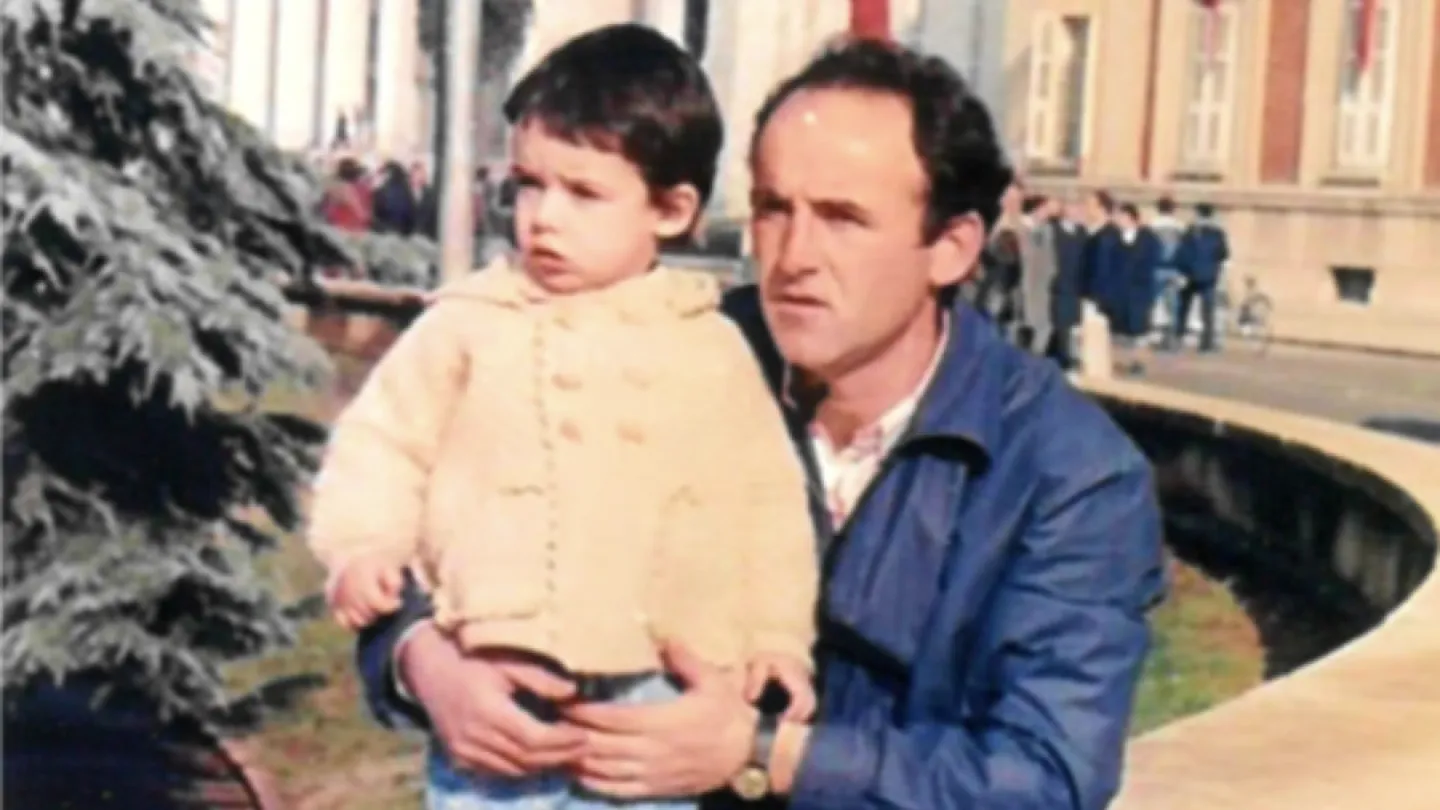
Eros Qama, MD, a fourth-year pathology resident, is sharing the news of his father's recent passing while honoring the man who profoundly influenced his family, research, and medical interests. Kujtim Qama was hospitalized for six months at Montefiore while receiving treatment for myelodysplastic syndrome. Eros played an active role in his father's care at Moses and was matched as his bone marrow transplant donor. Although his father worked hard to gain strength for the procedure, he unfortunately passed away on September 24, 2025, before undergoing the transplant. Mr. Qama was 72 years old.
“I want to honor my father’s legacy and tenacity, and to thank the Montefiore teams who became like our second family,” said Eros, who was born in Albania and emigrated to Staten Island with his family when he was in middle school.
Video could not be played
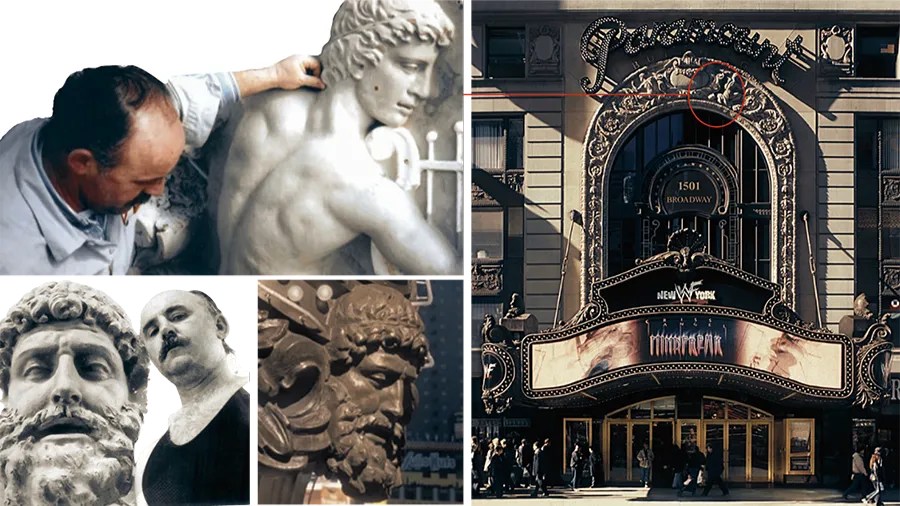
Using archival photographs from the 1920s, Mr. Qama meticulously restored the eroded sculptural arch at the entrance of the iconic Paramount building in Times Square to its original form by hand.
Restoring a NYC Art Deco Landmark by Hand
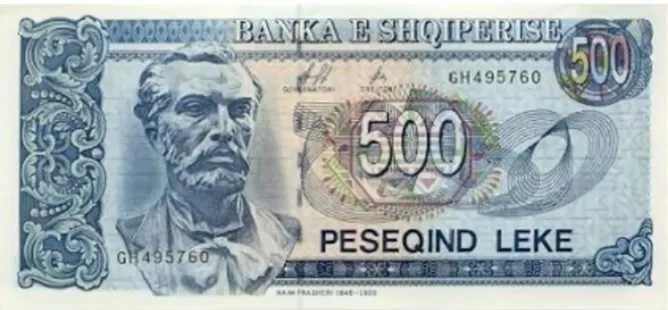
Kujtim Qama was a respected sculptor with public work in his native Albania and the United States. He graduated from the University of Arts in Tirana and built a career focused on large public commissions. In 2000, he rebuilt the 50-foot sculptural arch at the entrance of the Hard Rock Café at the Paramount Building in Times Square. Using archival photographs, Mr. Qama restored the damaged mythic figures to their original 1920s form by hand. He also created national monuments in Albania and designed the Albanian currency, including the 1995 five lek note that features the poet Naim Frashëri. After retirement, he lived between Rockland County and Tirana and continued working with his younger colleagues on the National Desert Shield and Desert Storm Memorial until his illness.
Video could not be played
Kujtim Qama designed Albanian currency, including the 1995 five lek note featuring poet Naim Frashëri
Detection of Donor Chimerism by NGS: A First Author Paper
Eros began working on donor chimerism testing in the summer of 2024, before his father entered the hospital, under the direction of D. Yitz Goldstein, MD, director of the Molecular Pathology Laboratory, and Adriana Colovai, MD, technical director of Cellular Immunology and Immunogenetics at Montefiore. The project gained personal meaning when he learned that the same test guides transplant decisions for oncology patients for whom transplantation is the only curative option.
The team validated an updated donor chimerism assay in the Montefiore clinical laboratory and submitted it to the New York State Department of Health. Their manuscript, ‘Highly Sensitive Detection of Donor Chimerism by Next Generation Sequencing,’ was published on November 28 in the Journal of Molecular Diagnostics. Eros is the first author.
The test tracks specific DNA markers to confirm that the donor's cells are reestablishing the patient’s marrow. Detecting the patient’s original markers after transplant may provide clinicians with an early warning. Older methods using Short Tandem Repeats (STRs) have been shown to be less sensitive and can miss early shifts. This version uses Next-Generation Sequencing (NGS) to detect low levels of donor or patient DNA, giving clinicians more time to adjust treatment.
How His Father’s Journey Is Shaping His Path Forward
The chimerism project quickly became both scientifically meaningful and personally significant. “My father’s journey made me acutely aware of how impactful this area of pathology can be for patients and families,” Eros said, noting that the experience may have shifted his career goals. After his Genitourinary Pathology Fellowship at NYU, he is considering work in transplant pathology and immunogenetics. He pointed out that transplant medicine is closely linked to pathology through compatibility testing, engraftment monitoring, and analysis of chimerism data. He has dedicated the publication to his father.
Video could not be played
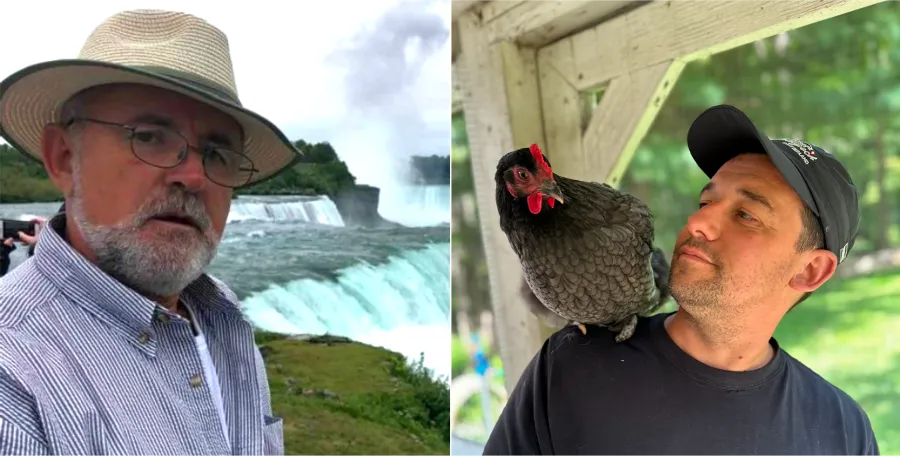
From left: Kujtim Qama and son Dr. Eros Qama in more recent times
Gratitude to Montefiore Providers and Teams
Eros expresses his gratitude to the many people at Montefiore who cared for his father with skill and kindness. He thanks Ali Sadoughi, MD, Director of Interventional Pulmonology, Aditi Shastri, MD, Associate Professor and physician scientist in AML and MDS, Mendel Goldfinger, MD, Clinical Program Director, and Dennis Cooper, MD, Chief of Bone Marrow Transplantation, whose detailed explanations and warm conversations, including moments about Albanian food and Arthur Avenue, lifted his father’s spirits even when he was too weak for a transplant.
He is thankful to the Critical Care team: Drs. Ariel Shiloh, Amira Mohamed, and Ari Moskowitz, the nurses and CNAs on Northwest 2, and the Department of Pathology staff and faculty for consistent support, with special gratitude to Yang Shi, MD, PhD, who went above and beyond for the Qama family.