
Video could not be played
Feature
The Anatomy of Perseverance: Dr. Priti Mishall’s Path to Transforming Anatomy Education
November 26, 2025
Video could not be played
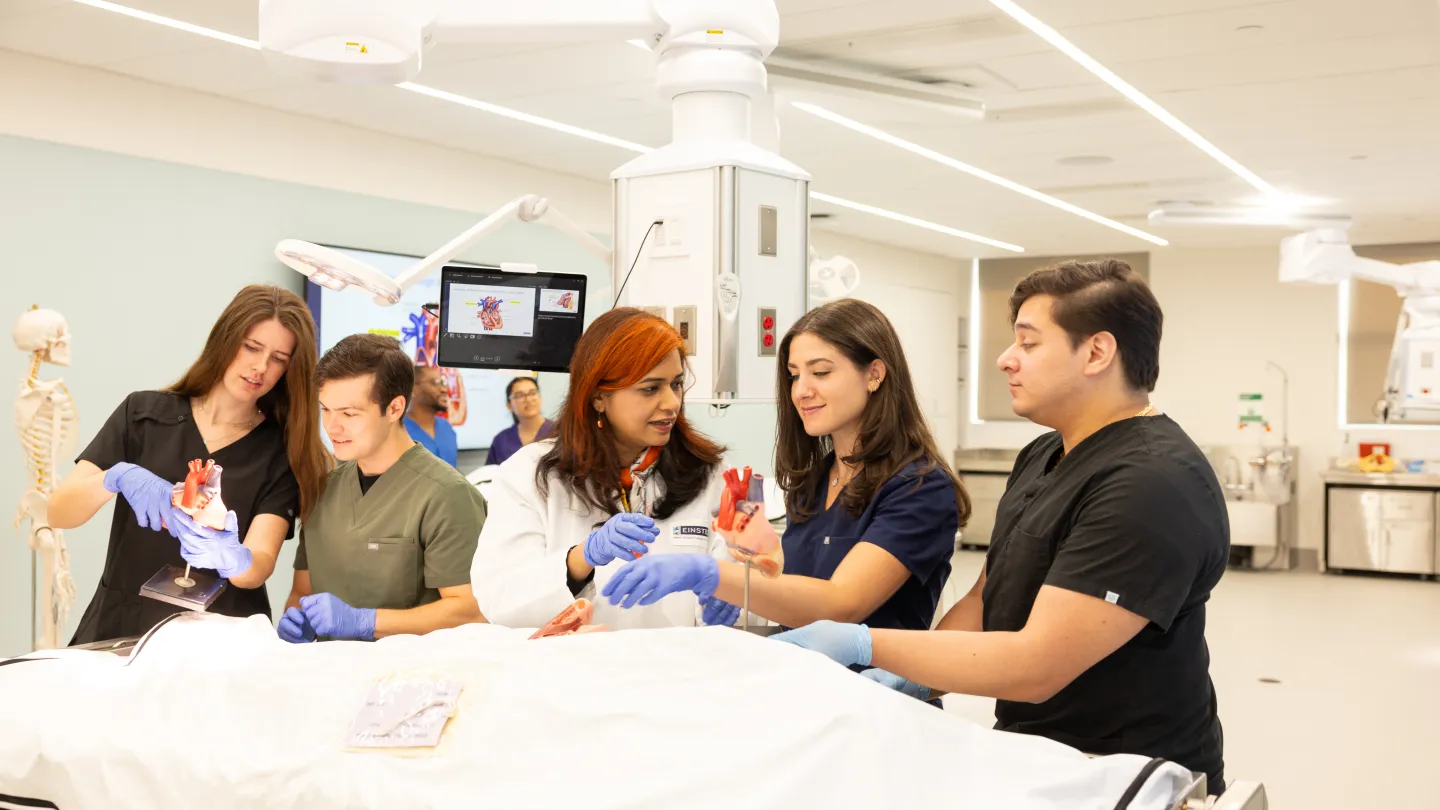
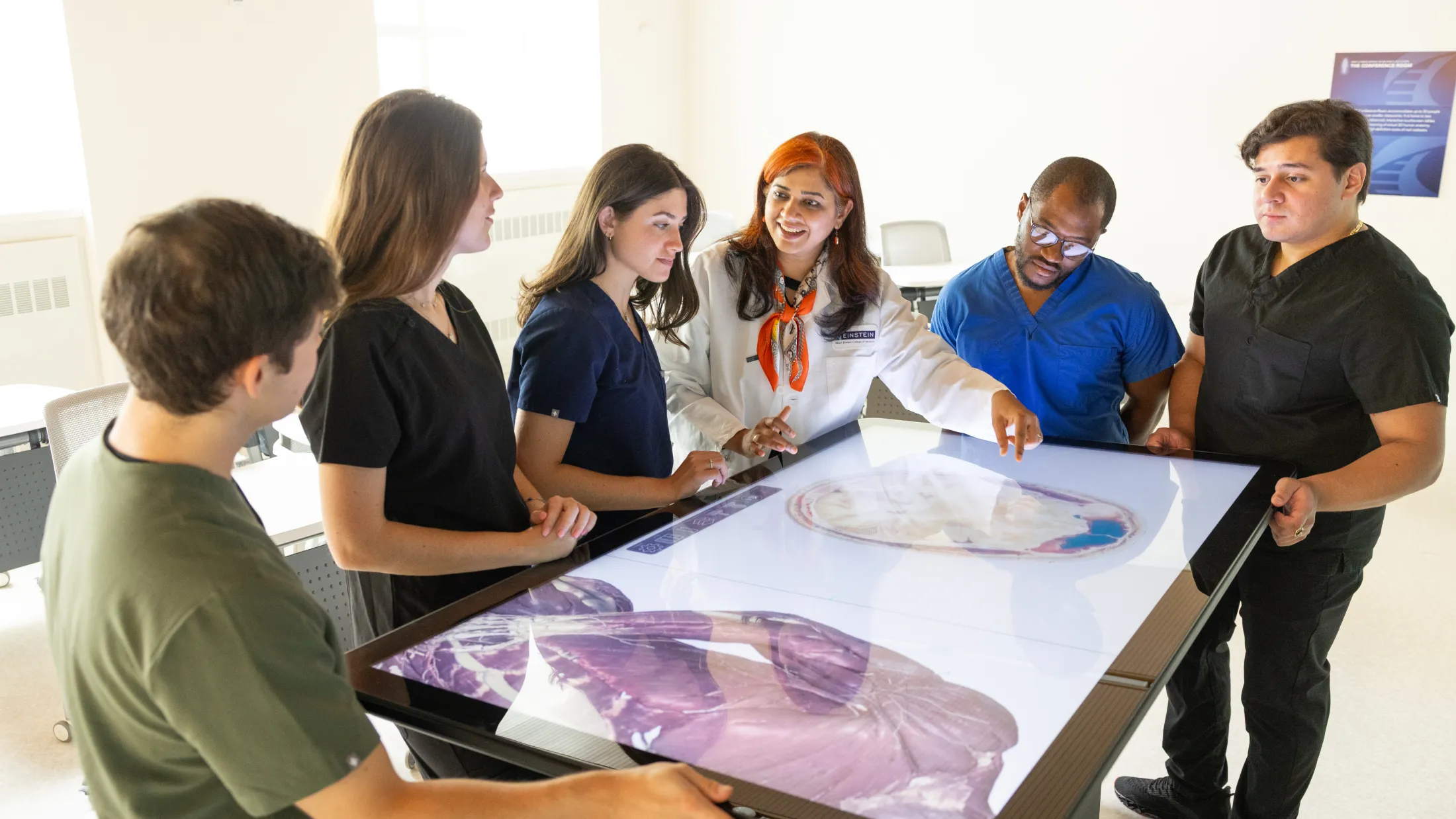
Priti Mishall, MD, (center) with Einstein pre-clerkship students exploring the anatomy of the human heart in the Harry H. Gordon Anatomy Lab and Surgical Skills Center
Dr. Priti Mishall walks through the new Harry H. Gordon Anatomy Lab and Surgical Skills Center, located on the first floor of the Van Etten building on the Einstein campus, greeting students and visitors with warmth and pride. As the director of the Clinical and Developmental Anatomy (C&DA) Course since 2021, she helped shape the design and function of the modern 10,000-square-foot space, built through an anonymous $14 million donation. The state-of-the-art center, which opened in August, showcases the advancement of anatomy education at Einstein and reflects Dr. Mishall's academic career growth as a medical educator.
Her 17-year rise from adjunct instructor to full professor mirrors the shift toward a more integrated, technology-driven approach to anatomy education.
"We're teaching the next generation to see both structure and meaning," said Dr. Mishall, who has a dual appointment as professor in the departments of pathology and ophthalmology and visual sciences. "The new lab makes that possible."
Video could not be played
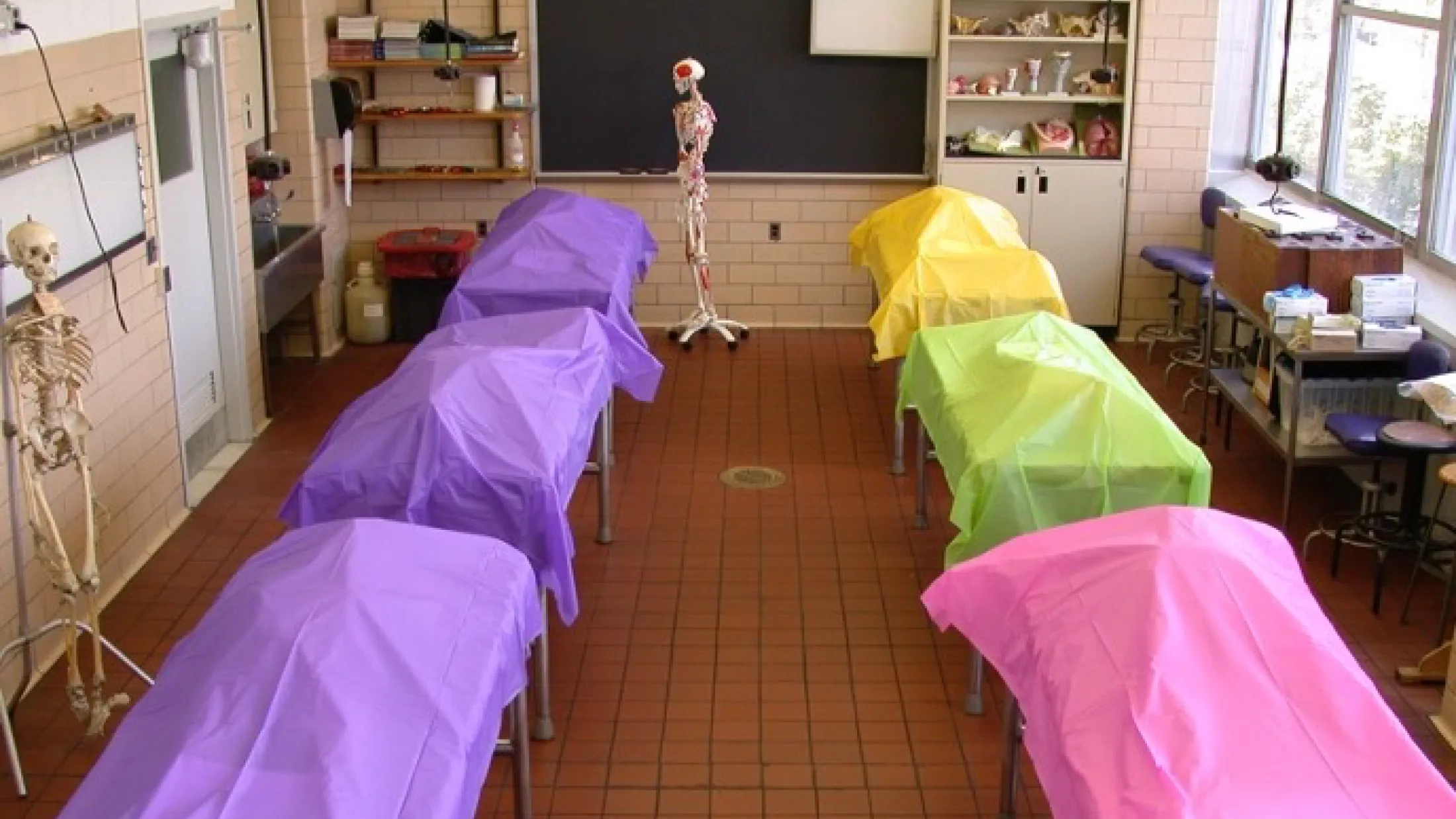
Former Anatomy room in the Forchheimer Medical Science Building
From Dissection to Prosection
In 2008, when she began teaching anatomy and histology as a part-time adjunct instructor, the course relied on traditional full-body dissection. However, in early 2020, in response to a national trend in medical education aimed at reducing pre-clerkship course hours and promoting early clinical exposure, she helped redesign the curriculum to adopt a prosection-based anatomy model. By the time the Class of 2024 arrived, students were learning from cadavers that had been prepared in advance by faculty. This approach allows students to focus on understanding the relationships between anatomical structures and their functions, rather than just the mechanics of dissection.
The new C&DA course, she explained, was developed based on the principles of curriculum alignment. This process connects the course's learning objectives and instructional methods, such as lectures and detailed cadaver prosections, to the course assessments, ensuring that students achieve the desired levels of competency. This framework supports students' interests across all medical specialties by providing a strong foundation in anatomy.
"Students now see clear links between anatomy, the boards, and patient care," Dr. Mishall said, noting that students can participate in hands-on dissection by enrolling in the fourth-year Anatomy elective.
Video could not be played
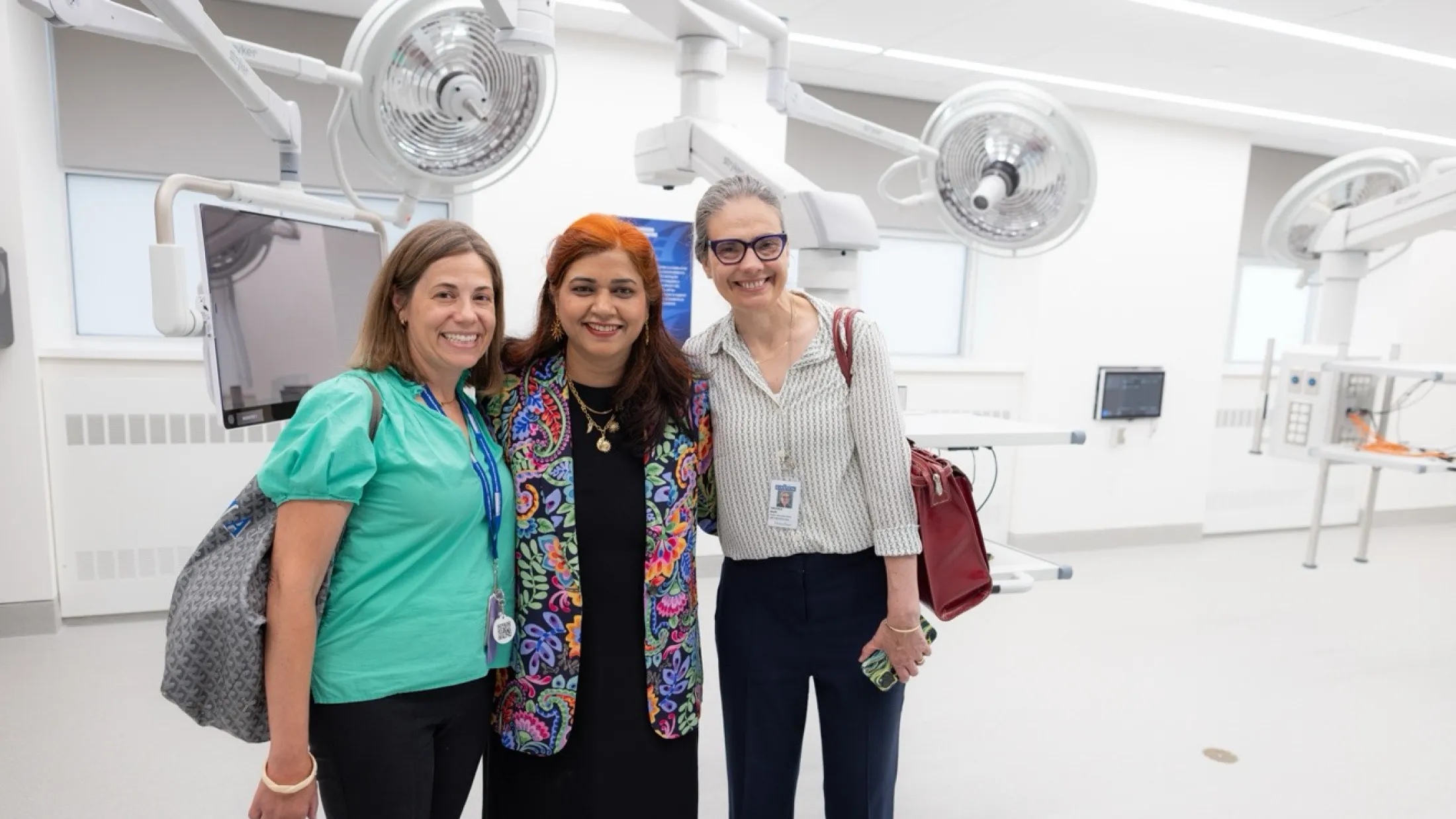
from left: Melissa Laudano, MD, Assistant Dean for Clinical Science Education, Priti Mishall, MD, C&DA course director, and Amanda Raff, MD, Senior Associate Dean for Medical Education, in the Harry H. Gordon Surgical Skills Center.
Dr. Mishall’s dedication to medical education and innovative leadership has earned her colleagues' praise.
“Priti is attuned to student learning and makes continuous and real-time adjustments to optimize her students' success," said Amanda Raff, MD, professor of medicine (nephrology) and senior associate dean for Medical Education. "Her passion for education and incorporation of advanced technology to harness learning contributed to the design and success of the new anatomy and surgical skills center."
A State-of-the-Art Learning Environment
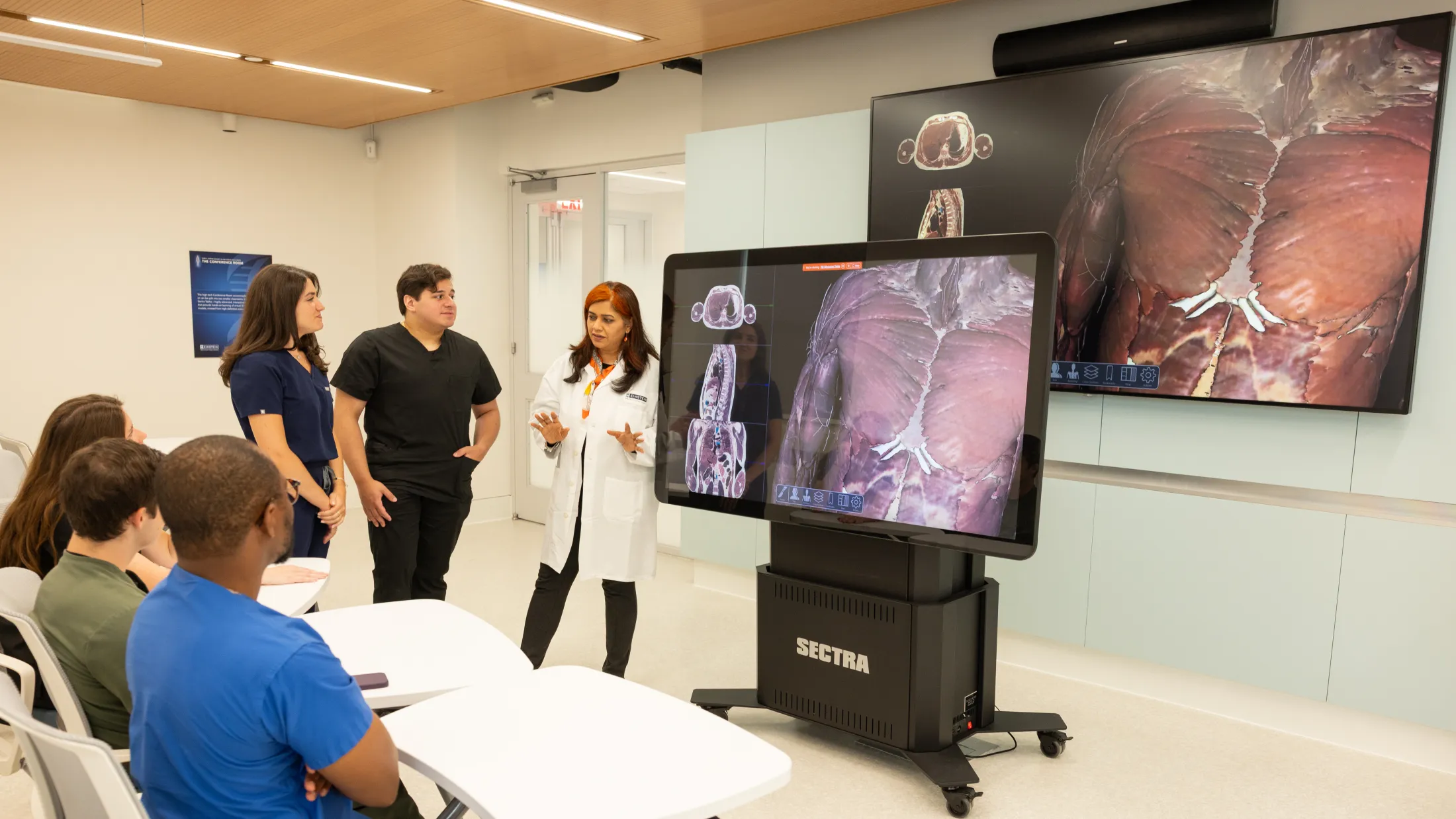
Advanced digital, audio, and imaging technologies bring a modern approach to anatomy education. In the 50-seat conference room, two Sectra Tables with 75" touchscreens will allow students to explore 3D anatomy, manipulate virtual dissections, and review imaging together in real time.
Video could not be played
Dr. Priti Mishall (in white coat) guides students through a digital dissection in the conference room of the new anatomy lab. The high-resolution Sectra touchscreen displays layered muscle structures, giving students a clear view before they move to hands
In the main anatomy labs, about 75 students rotate through nine advanced dissection stations, each with a large monitor and a ceiling-mounted tablet with cameras for close-up demonstrations. Small groups of students rotate among three dissection stations to actively participate in faculty-facilitated demonstrations of bones, muscles, and neurovasculature.
Donating Bodies for Science
The outstanding anatomy education is made possible by the cadavers generously donated through Einstein’s Anatomical Donation Program. "Students value the opportunity to learn about the intricacies of the human body from cadaver donors," said Dr. Mishall, who manages the initiative. Each year, Einstein students honor and respect the selfless contributions of donors during the Convocation of Thanks Ceremony, through poems, music, and art.
Video could not be played
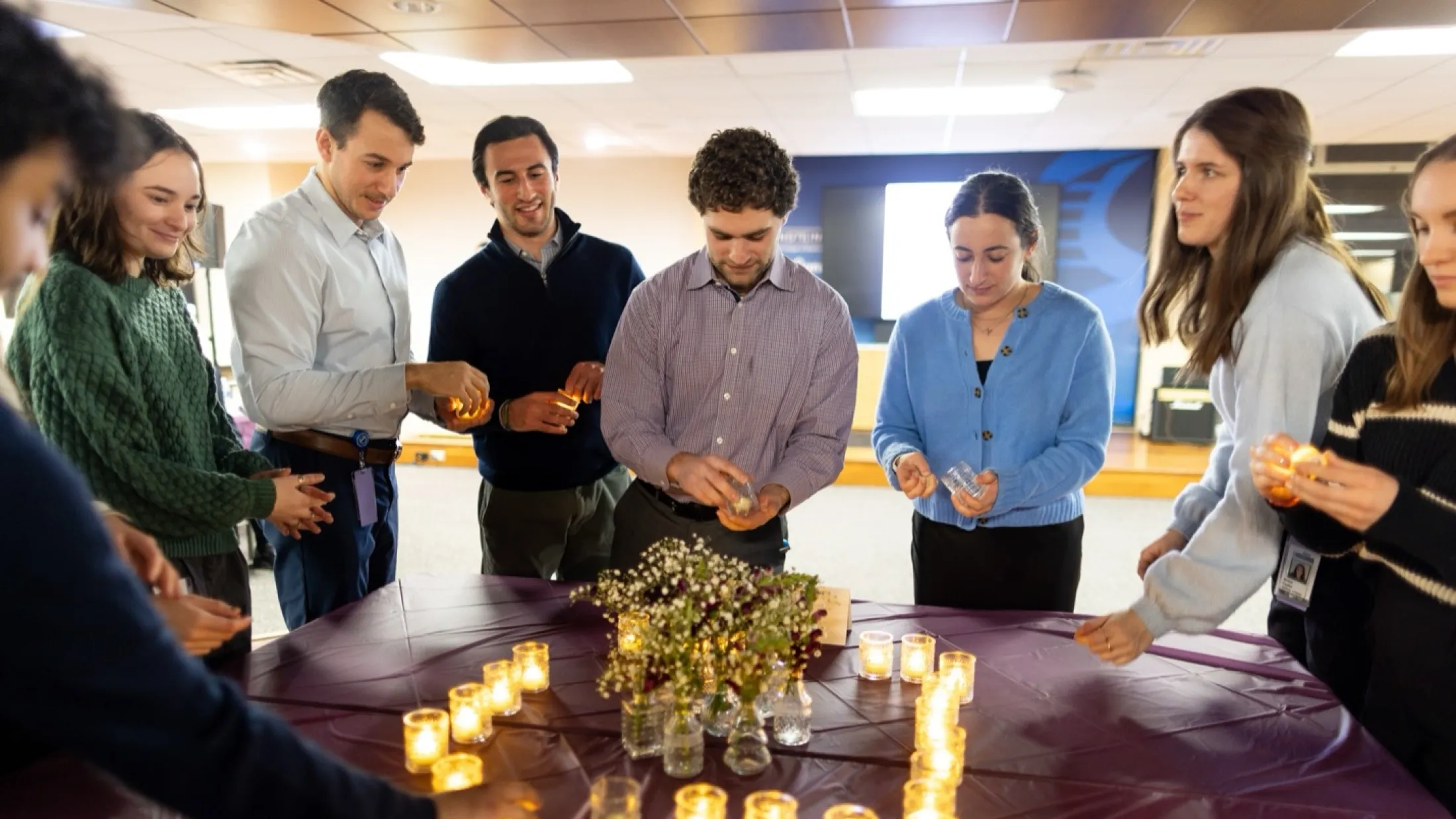
Einstein students from the Class of 2024 light candles in remembrance of cadaver donors during the annual Convocation of Thanks event.
The center will soon feature a simulated operating room that will hold skills workshops for medical students, residents, and clinicians. The center also features a student lounge, locker rooms, and faculty offices.
A Career Built on Teaching and Mentorship
Dr. Mishall completed her medical and postgraduate training in Human Anatomy in India, with a passion for becoming a clinical educator. Shortly after arriving in the United States in 2008, she met Dr. Todd Olson, then the anatomy course director at Einstein, who invited her to teach anatomy and histology as an adjunct instructor. To advance her career, she completed a three-year online postgraduate course in Medical Education from the University of Dundee.
Video could not be played
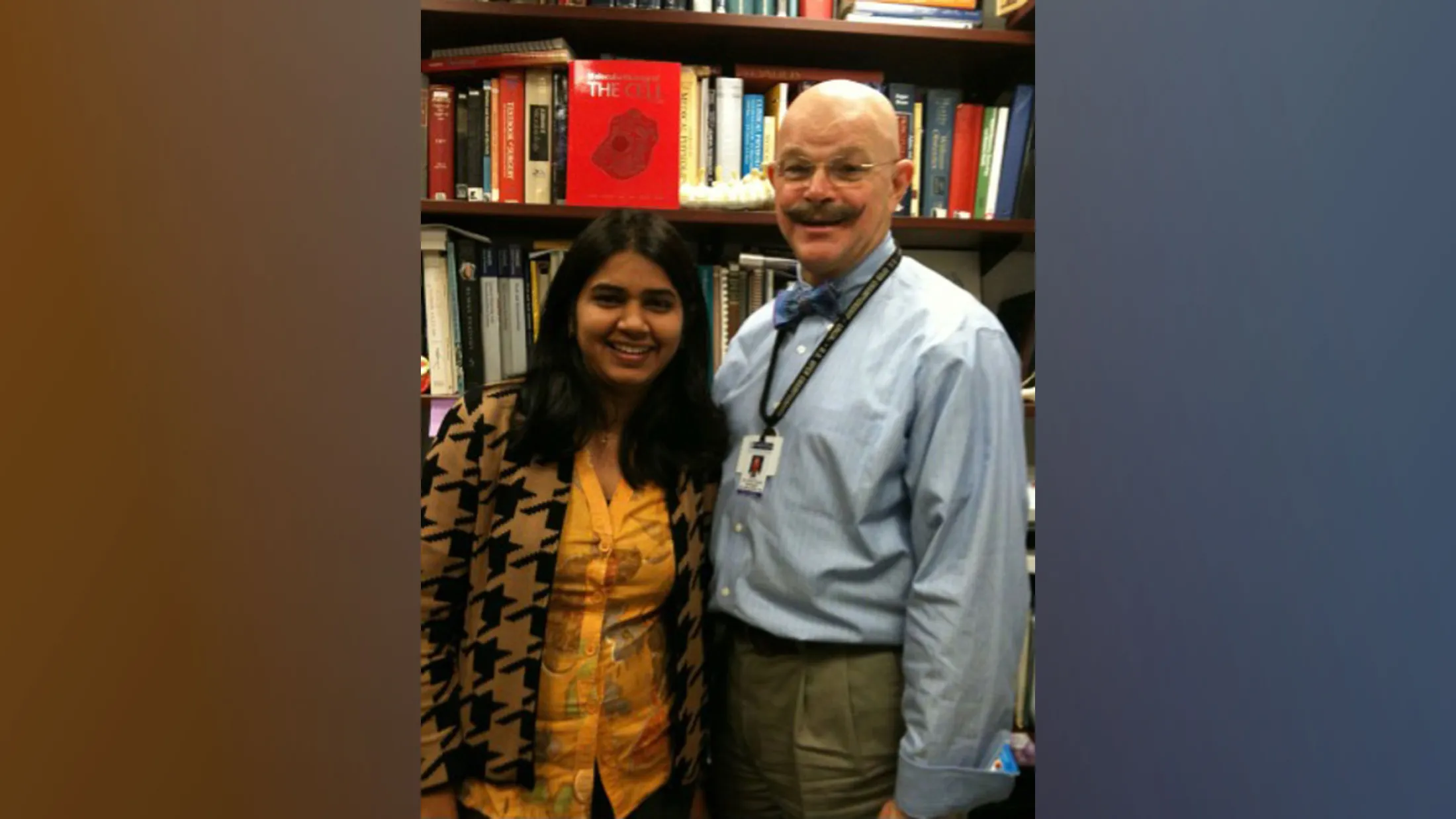
Dr. Priti Mishall with Dr. Todd Olson, former Anatomy course director at Einstein, in 2009
"That degree gave me the tools to apply the constructive alignment framework of curriculum design to redesign how we teach anatomy at Einstein," she said. In 2013, Dr. Mishall joined Einstein as a full-time assistant professor. In 2025, she was promoted to the rank of full professor, completing her academic journey.
Building Confidence and Continuity
Mentorship remains central to Dr. Mishall's work. She credits her mentors at Einstein and in national organizations for guiding her academic path and now supports younger educators. She previously chaired the Career Development Committee for the American Association of Clinical Anatomists. "Mentorship builds confidence and continuity," she said. "It's how education evolves."
Video could not be played
Dr. Mishall and Einstein medical students
As she guides students through the new anatomy lab, Dr. Mishall returns to the lesson that shaped her own career: "You build success by showing up, staying curious, and respecting the work in front of you."