
Video could not be played
Feature
Seeing Global Pathology Firsthand: An MSTP Student’s Immersive Month in Rwanda
May 30, 2025
Q&A: Joseph Sweeney, MSTP Student, Class of 2025
Video could not be played
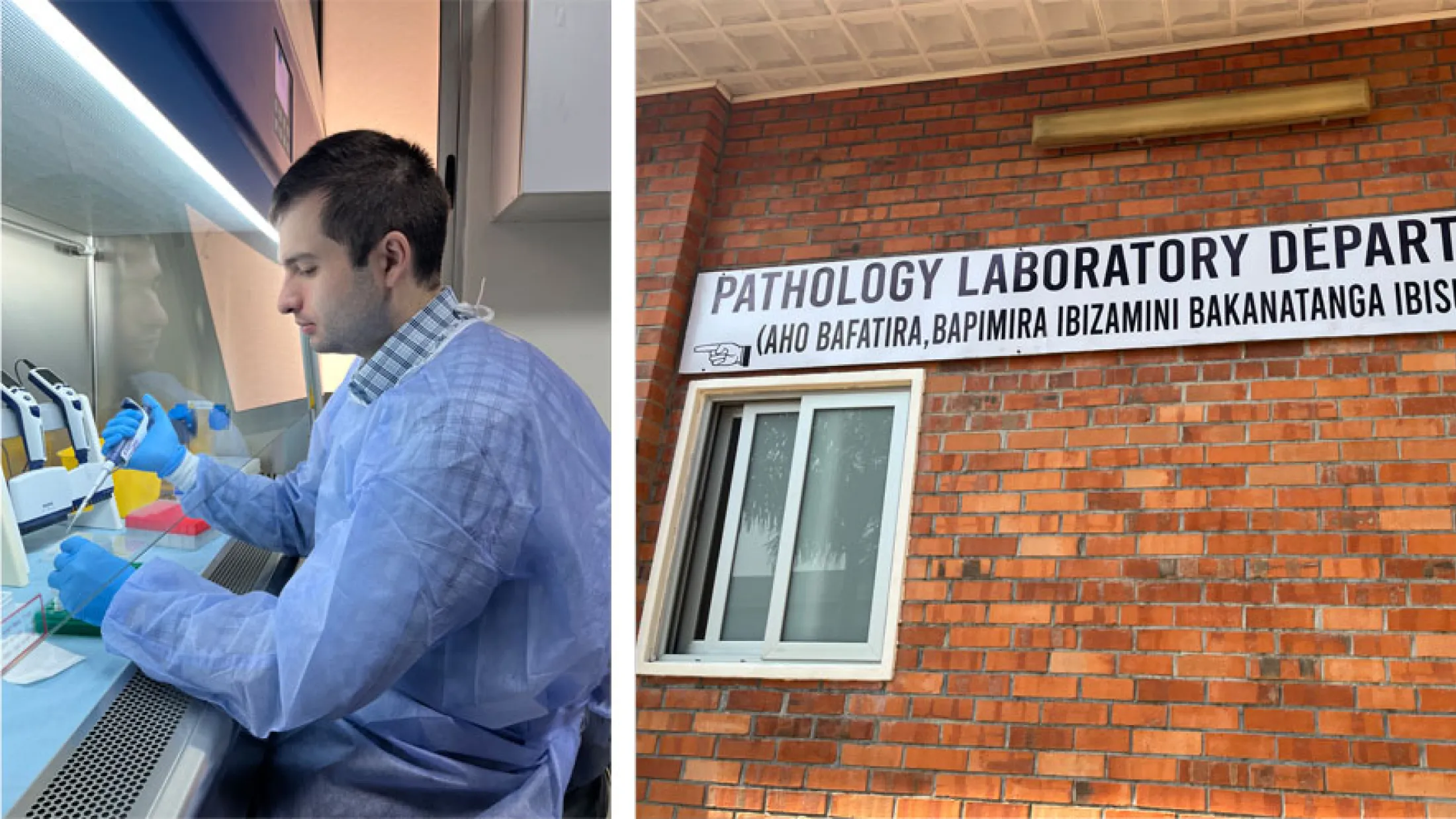
Recent MSTP graduate Joseph Sweeney in the research lab at the Rwanda Military Teaching and Referral Hospital in Kigali, Rwanda
Just a few months before graduating from Montefiore Einstein’s intensive Medical Scientist Training Program (MSTP) with an MD PhD, Joseph Sweeney, an aspiring clinical pathologist, traveled to Rwanda to see firsthand pathology in practice outside the United States.
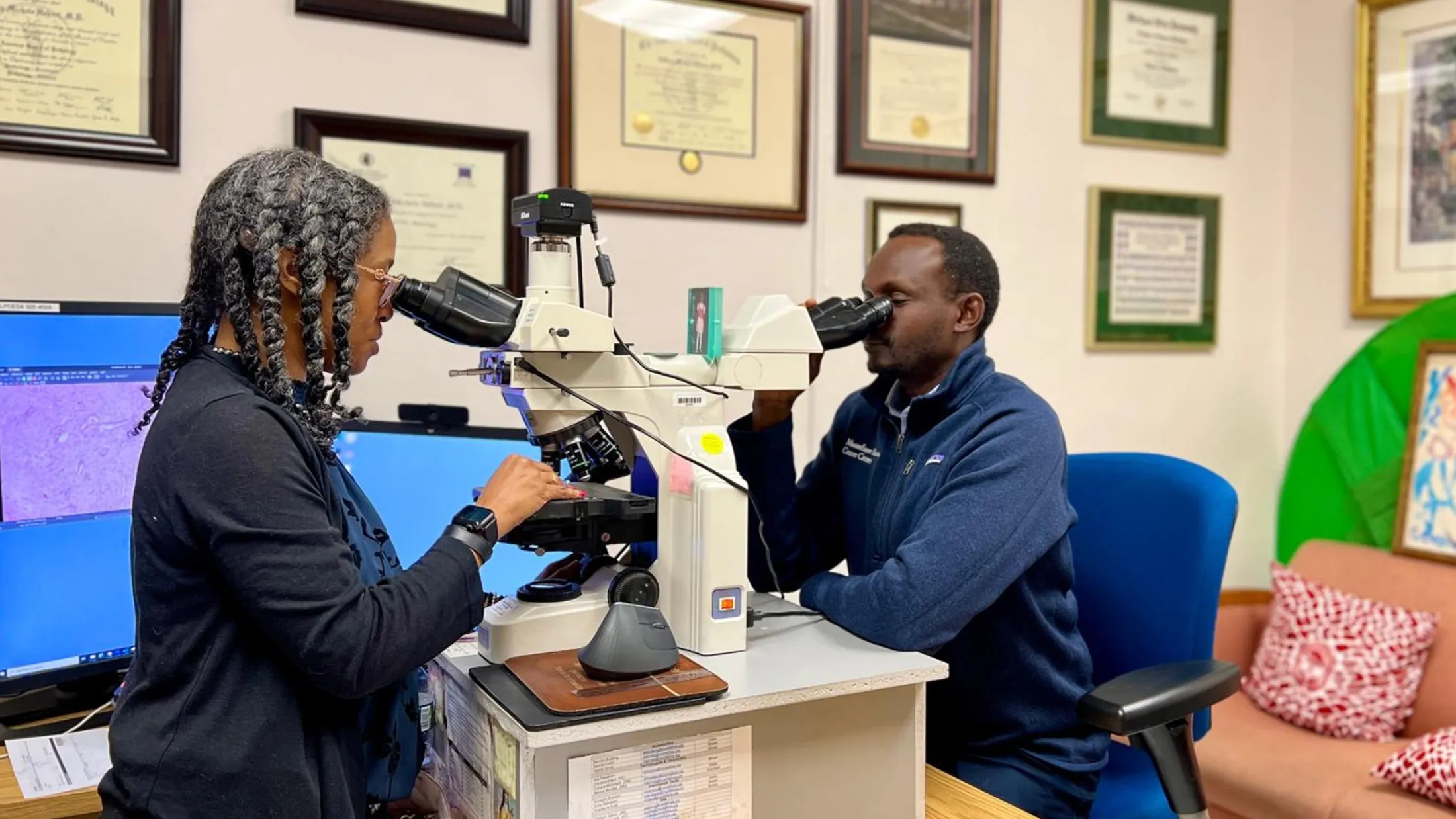
In January, he joined the clinical pathology team at Rwanda Military Teaching and Referral Hospital in Kigali through Einstein’s Medical Student Global Health Fellowship program. The month-long elective was organized and led by Gad Murenzi, MD, PhD, a Rwandan pathologist and researcher, who serves as director of the Einstein-Rwanda Research and Capacity Building Program (ER-RCBP). In 2012, Dr. Murenzi completed postdoctoral training in gynecologic pathology and cytopathology at Montefiore Einstein under the mentorship of Tiffany Hébert, MD, an associate professor of pathology and attending surgical pathologist. He now leads efforts to expand pathology capacity in Rwanda, with a focus on gynecologic and HIV-related cancers.
Dr. Murenzi designed the Rwanda program for a single fourth-year Einstein medical student pursuing a career in pathology, with completed clinical pathology rotations and a strong interest in global health. Sweeney, 30, an Einstein Pathology Interest Group member who will begin a clinical pathology (CP) residency at Mass General Brigham in Boston this July, was an ideal candidate.
During his PhD training, he conducted his thesis research in the lab of Myles Akabas, MD, PhD, Professor of Neuroscience and Medicine and director of Einstein’s MSTP program. His interest in pathology was sparked during the COVID-19 pandemic while working with Morayma Reyes Gil, MD, PhD, then director of Montefiore’s Hematology and Coagulation Lab, on coagulation biomarkers. Sweeney also learned about the inner workings of running a large clinical laboratory. Then he conducted research on B-cell acute lymphoblastic leukemia (B-ALL), under Yanhua Wang, MD, PhD, director of the Hematopathology Service at Montefiore. Sweeney’s hands-on experience in these various clinical pathology laboratories led him to seek a global health program where he could contribute his unique skills.
“Participating in global health is a transformative experience, particularly for future physicians,” said Jill Raufman, MS, MPH, a principal staff scientist in the department of pathology and director of Einstein’s Medical Student Global Health Programs and associate director of the Global Health Center. “When Joseph approached me about finding an opportunity, I was determined to help him find the right one; I’m so glad that he ended up working with Dr. Murenzi. I know having had this experience will give him an added perspective on everything that he does in the future.” Qualified students can inquire about this and other programs through the Global Health Center office.
Sweeney recently spoke with The Scope about how his time in Rwanda deepened his global perspective on pathology.
Q&A with Joseph Sweeney
What drew you to this experience in Rwanda during your final year at Einstein? I had always wanted to do a global health fellowship—something that would let me explore how medicine and pathology are practiced outside the U.S. while volunteering in a meaningful way. As an aspiring clinical pathologist, I wanted to see whether global health could become a long-term part of my career.
The first summer of MSTP - when global health fellowships are available to first-year medical students - is packed with required rotations. The fourth year of medical school is the first real opportunity for MSTP students to engage in global work. At a Global Health Meet and Greet, I met Drs. Kathy Anastos and Johanna Daily, both leaders in Einstein’s global health efforts, and they connected me with Dr. Gad Murenzi, a practicing pathologist in Rwanda. In a virtual meeting, I told Dr. Murenzi that I planned to pursue a career in pathology and was also interested in global health. Even with all his ongoing work and research, he generously agreed to sponsor me and created a global health elective at Rwanda Military Hospital.
Video could not be played
Dr. Tiffany Hebert (left) and Dr. Gad Murenzi reviewing gynecological pathology cases at Montefiore
What was the goal of the fellowship—was it mostly clinical or research-based? The main goal was to rotate through and assist in the clinical pathology laboratories at Rwanda Military Hospital. I spent two to four days on each service—clinical chemistry, molecular, hematology, blood bank, hematopathology, and microbiology. I also worked in Dr. Murenzi’s research laboratory for several days.
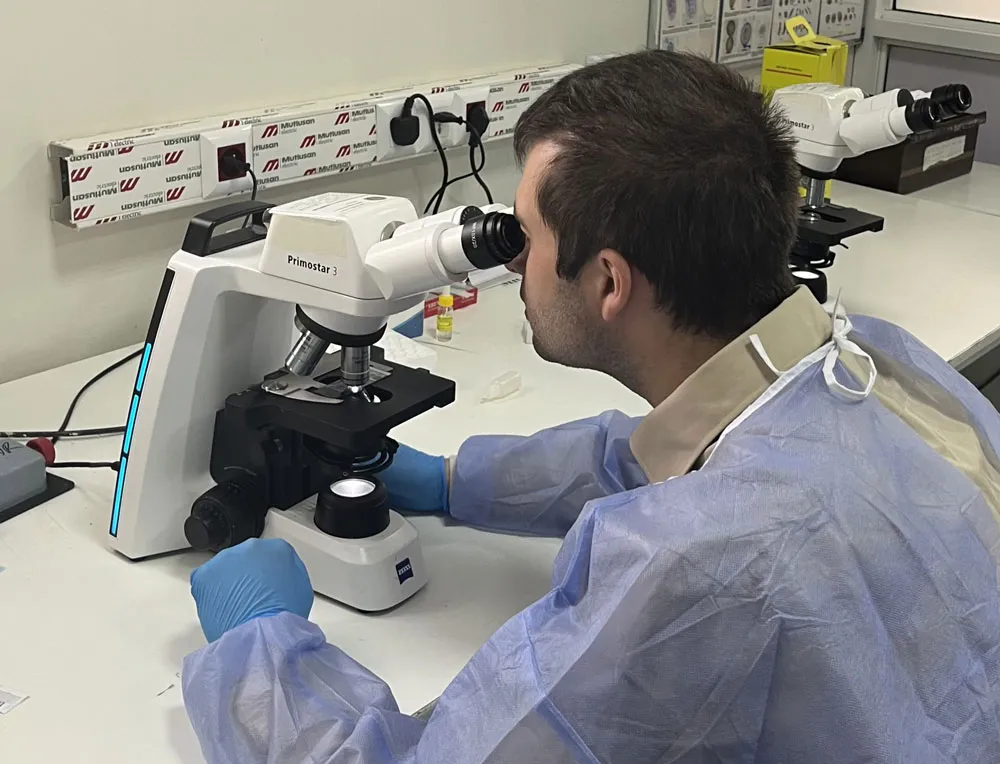
What was a typical day like? For most of the trip, I worked alongside laboratory technologists processing patient samples. Clinical chemistry and hematology were more automated, while microbiology was largely manual. In clinical chemistry, I documented samples and ran the machines—still needing to centrifuge and pipette plasma manually. In hematology, I helped with erythrocyte sedimentation rates and agglutination tests. In microbiology, I did slide staining and microscopy. My PhD wet-lab background was useful in Dr. Murenzi’s lab, where I helped run ELISA, PCR, and other assays.
Video could not be played
Can you share an eye-opening or unforgettable moment? The diversity of the roles of pathologists in Rwanda was surprising. While working with a pathologist on the hematopathology service, I saw her interpret bone marrow biopsies and diagnose blood cancers. But she was also running the blood bank and transfusion clinic, interpreting blood smears for conditions like anemia, and seeing hematology patients in the clinic. It was inspiring to see how she handled so many different roles and cared for people who desperately needed it.
What did you learn in Rwanda that you couldn’t have learned in a classroom? There’s no strict division between anatomic and clinical pathology in Rwanda. Most pathologists are trained in anatomic pathology, and clinical laboratories are run by “laboratory scientists” who aren’t MDs. Advanced diagnostics like flow cytometry or molecular assays are limited — samples often need to be sent to other hospitals or even out of the country, which is only possible if patients can afford it. It was a powerful reminder of global diagnostic disparities and the need for cost-effective solutions.
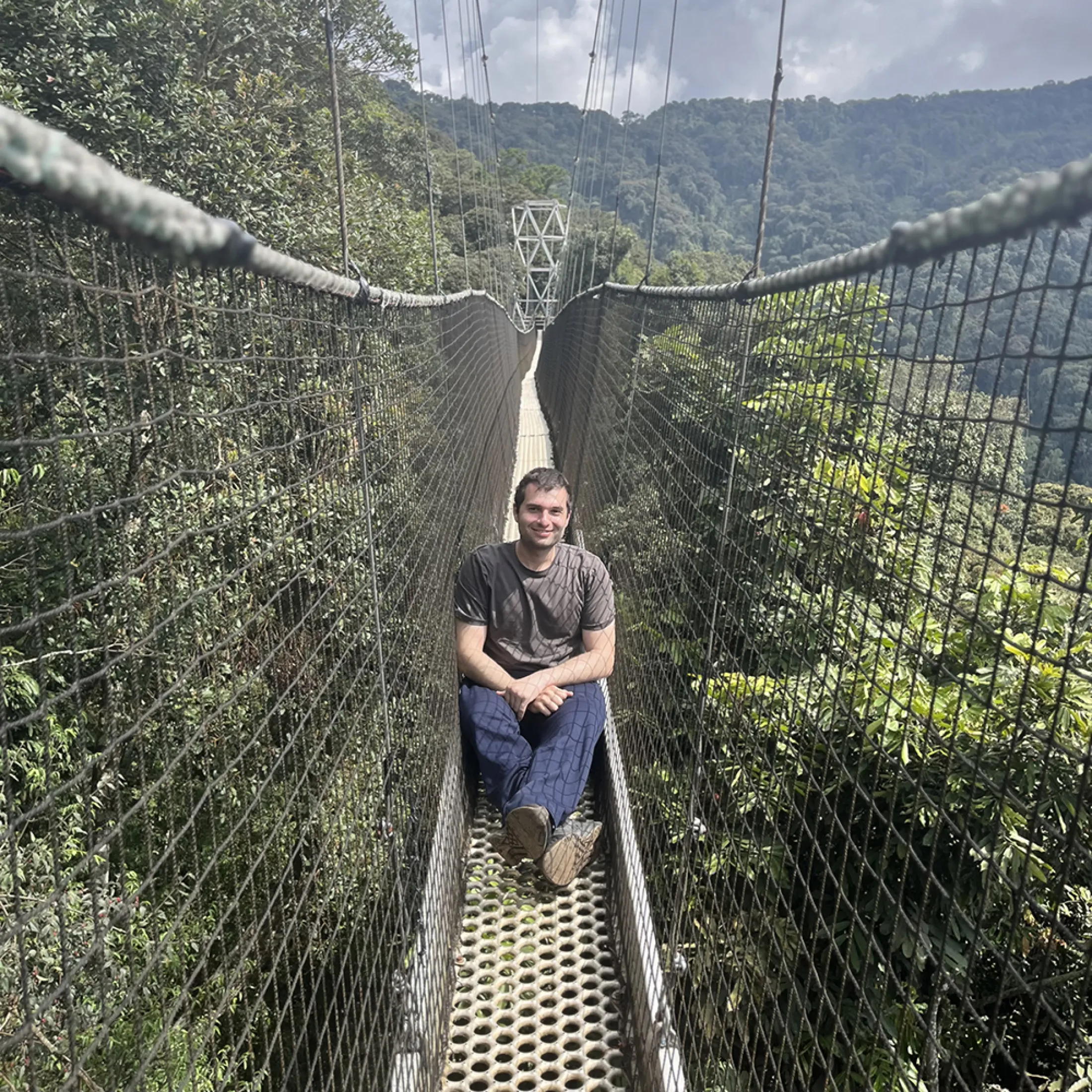
What were some of your experiences outside the hospital? I stayed in a guest room behind a restaurant called Fika Café, recommended by Rwandan friends of other Einstein students. I was traveling solo but made friends with local students doing clinical pathology rotations. They showed me around Kigali—the markets, food spots, city center—we even played basketball and went to an arcade. I also went on a couple of other exciting adventures including hiking in Nyugwe National Forest, gorilla trekking in Uganda, and a safari in Akagera National Park, on the border of Rwanda and Tanzania.
Video could not be played
Joseph Sweeney at the Nyugwe National Forest in Rwanda
You’re about to begin your pathology residency at Mass General Brigham. Do you think you’ll stay involved in global health? Absolutely. I had an amazing experience working in the laboratories and connecting with local pathologists, laboratory scientists, and students. I’d love to return when I have more training and experience. There’s a huge opportunity in clinical pathology to improve access to diagnostic testing globally.
Learn more about the work of Drs. Hébert, Murenzi, and Kathryn Anastos and the Einstein Global Health program in Rwanda in the Emmy Award-winning documentary Ineza Means Kindness, directed and produced by Sunita Reed, Einstein’s director of multimedia communications, and her team. Watch Video.